

 Facebook
 X
X
 Pinterest
 Copy Link
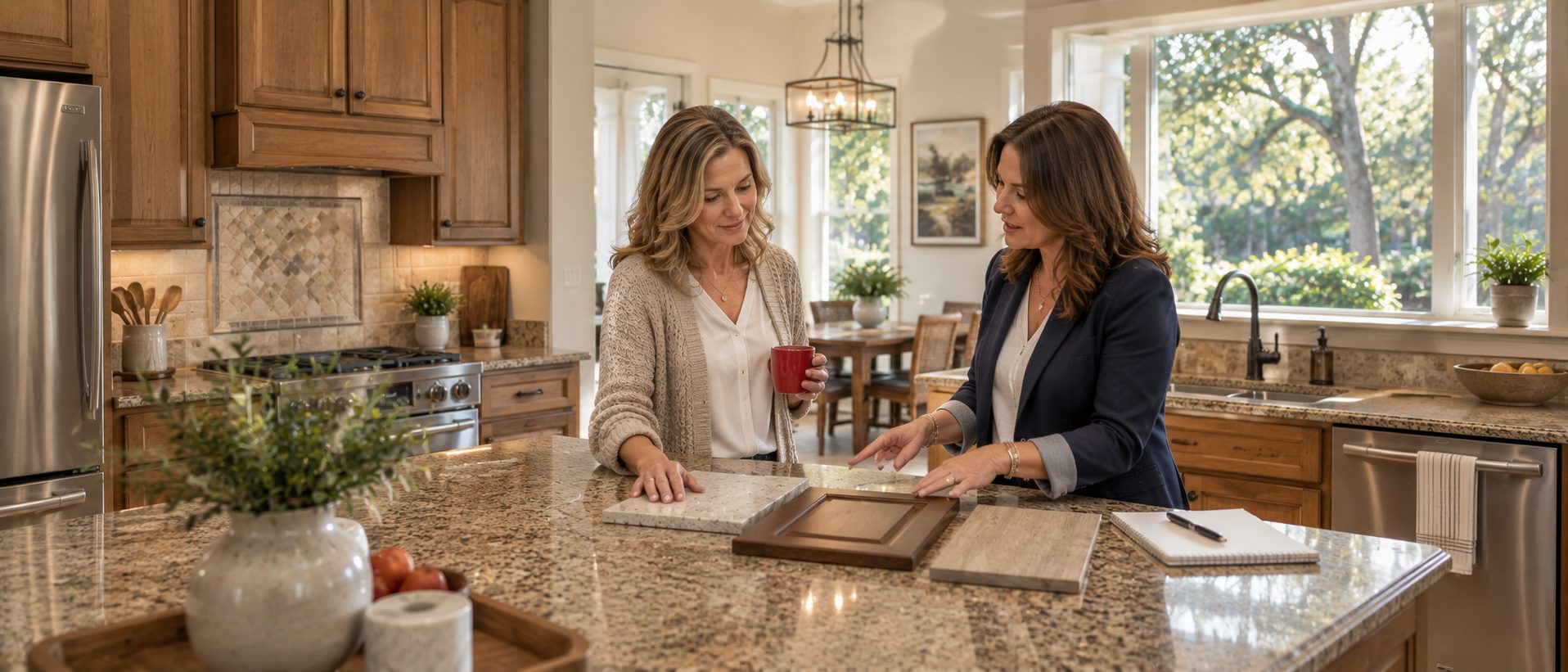
Not every improvement earns its way back—and not every home needs to look new.
Once homeowners start thinking about selling, something interesting often happens.
They begin noticing everything they would change about their house.
The countertops suddenly seem dated.
The bathroom feels tired.
The flooring they’ve lived with comfortably for years starts looking like something every buyer will surely hate.
Before long, there’s a list.
Paint. Flooring. Light fixtures. Landscaping. Kitchen. Bathroom.
And sometimes a contractor.
But before spending money getting a home ready to sell, we’d suggest starting somewhere else:
Find out what the house actually needs.
That isn’t always the same as what you would change if you planned to keep living there.
As we discussed in preparing for a sale before you’re actually ready to list, one advantage of starting early is having enough time to make thoughtful decisions instead of reacting to a deadline.
That matters especially when those decisions involve your money.
A Repair and an Upgrade Aren’t the Same Thing
One of the first distinctions we make when looking at a home is the difference between something that needs attention and something that’s simply no longer current.
A leaking faucet is a repair.
Damaged flooring may be a repair.
Wood rot, a broken appliance, or a system that isn’t functioning properly deserves attention.
A perfectly functional countertop in a color that isn’t currently popular?
That’s different.
So is a bathroom that’s clean and well maintained but hasn’t been remodeled recently.
Buyers notice condition.
They also notice style.
But those two things shouldn’t automatically be treated the same way.
A house does not have to look brand new to sell successfully.
It needs to be presented honestly, maintained appropriately, and positioned correctly for the market.
Don’t Renovate for the Buyer You Imagine
This is where sellers can accidentally spend a lot of money.
You begin imagining what a future buyer will want.
Maybe they’ll want white cabinets.
Maybe they’ll prefer quartz.
Maybe they’ll dislike the flooring.
So you choose finishes you think will appeal to them.
The problem?
You haven’t met that buyer.
And sometimes the buyer would rather purchase the home at an appropriate price and make those choices themselves.
Before undertaking a significant renovation, it helps to understand who is likely to buy the property and what comparable homes are offering.
A starter home competes differently than a waterfront property.
A newer home competes differently than an established home in a mature neighborhood.
A house that is already well maintained may need far less preparation than its owner assumes.
Context matters.
Look at the Competition Before You Look at the Sample Board
Your home doesn’t enter the market by itself.
Buyers will compare it with other available properties.
That’s why one of the most useful things we can do before recommending improvements is look at what the home will likely compete against.
Are comparable homes updated?
Are buyers paying noticeably more for those updates?
Are competing homes mostly in similar condition?
Is inventory giving buyers many alternatives?
Would one improvement meaningfully change how your property compares—or would you simply be spending money to end up in roughly the same market position?
Those questions are more useful than:
“What color countertops are popular right now?”
This is part of how we help clients make better real estate decisions.
The goal isn’t to make your house look like someone else’s.
It’s to understand how your home can compete effectively as your home.
Sometimes the Best Preparation Isn’t Renovation
A home can feel dramatically different without a major remodeling project.
Cleaning.
Decluttering.
Removing excess furniture.
Touching up damaged paint.
Repairing things that aren’t working properly.
Improving lighting.
Cleaning up landscaping.
Making sure buyers can clearly see and understand each room.
Those aren’t glamorous projects.
But sometimes they accomplish exactly what the house needs: they remove distractions.
When buyers walk through a property, we want them thinking about whether the home works for them.
We don’t want them mentally compiling a list of small maintenance items that makes the house feel like more work than it really is.
Some Improvements Can Change the Conversation
There are also situations where spending money before listing makes sense.
Perhaps one visibly worn element makes the entire home feel poorly maintained.
Maybe an inexpensive improvement corrects something buyers are likely to notice immediately.
Or perhaps the competition has established a clear expectation that the property needs to meet.
The important part is that the decision has a reason behind it.
Not:
“Everyone says you should update before selling.”
But:
“Here’s what we’re trying to improve, here’s how buyers are likely to respond, and here’s why we think it’s worth doing.”
That’s a much better basis for deciding whether to write the check.
Be Careful About Starting a Project You Can’t Finish Easily
Renovation has another cost sellers sometimes underestimate:
time.
A project that sounds simple can grow.
Materials get delayed.
Contractors uncover another issue.
One improvement makes the room beside it suddenly look dated.
And a project you expected to finish in two weeks begins affecting when you can put the home on the market.
That’s why timing belongs in the decision along with cost.
If you’re considering a move, understanding your goals and timeline before preparing the house can help prevent the preparation itself from dictating when you’re able to sell.
Questions Worth Asking
Before starting a project primarily because you’re planning to sell, ask:
- Is this something that needs to be repaired, or simply something I’d prefer to update?
- Will this improvement meaningfully change how buyers perceive the home?
- Am I choosing finishes for myself or guessing what a future buyer might want?
- How does my home’s current condition compare with the properties it will compete against?
- Could the money—or time—I put into this project be more useful somewhere else in my selling plan?
The answer may still be:
Yes. Do the project.
But now you’re doing it for a reason.
Let the Market Help Decide What the House Needs
One of the advantages of talking with an experienced real estate professional before you start preparing is perspective.
You’ve lived in your house.
You see every imperfection because you’ve looked at it thousands of times.
We look at it differently.
We’re thinking about what buyers are likely to notice, how the property compares with competing homes, what could interfere with a sale, and which changes may actually strengthen its position.
That’s another example of why thoughtful decisions lead to better moves.
Sometimes our advice may confirm the project you already had in mind.
Sometimes we’ll suggest putting your attention somewhere else.
And sometimes one of the most valuable things we can tell you is:
Leave it alone.
Prepare the Home You Have—Don’t Try to Create a Different One
The goal of preparing a home for sale isn’t to erase everything that makes it an established home.
It’s to present what you have at its best.
Take care of what needs attention.
Remove unnecessary distractions.
Make thoughtful improvements where they make sense.
And understand the market before investing money simply because you assume buyers expect something newer.
Your home doesn’t have to be perfect.
It needs a preparation strategy that makes sense for the property, the market, your timeline, and what you want your sale to accomplish.
That’s a much better place to start than the renovation aisle.
Written by the Sherman Grimmer Group
The Sherman Grimmer Group shares thoughtful real estate guidance through Steady Together, helping buyers and sellers throughout Northwest Florida make confident decisions at every stage of life.
Steady Together
Before you start replacing, remodeling, or renovating, understand what your home really needs to compete well.
Sometimes the right project can make a meaningful difference. Sometimes thoughtful preparation costs far less than you expected.
Knowing which is which is part of making a better move.
— The Sherman Grimmer Group
