

 Facebook
 X
X
 Pinterest
 Copy Link
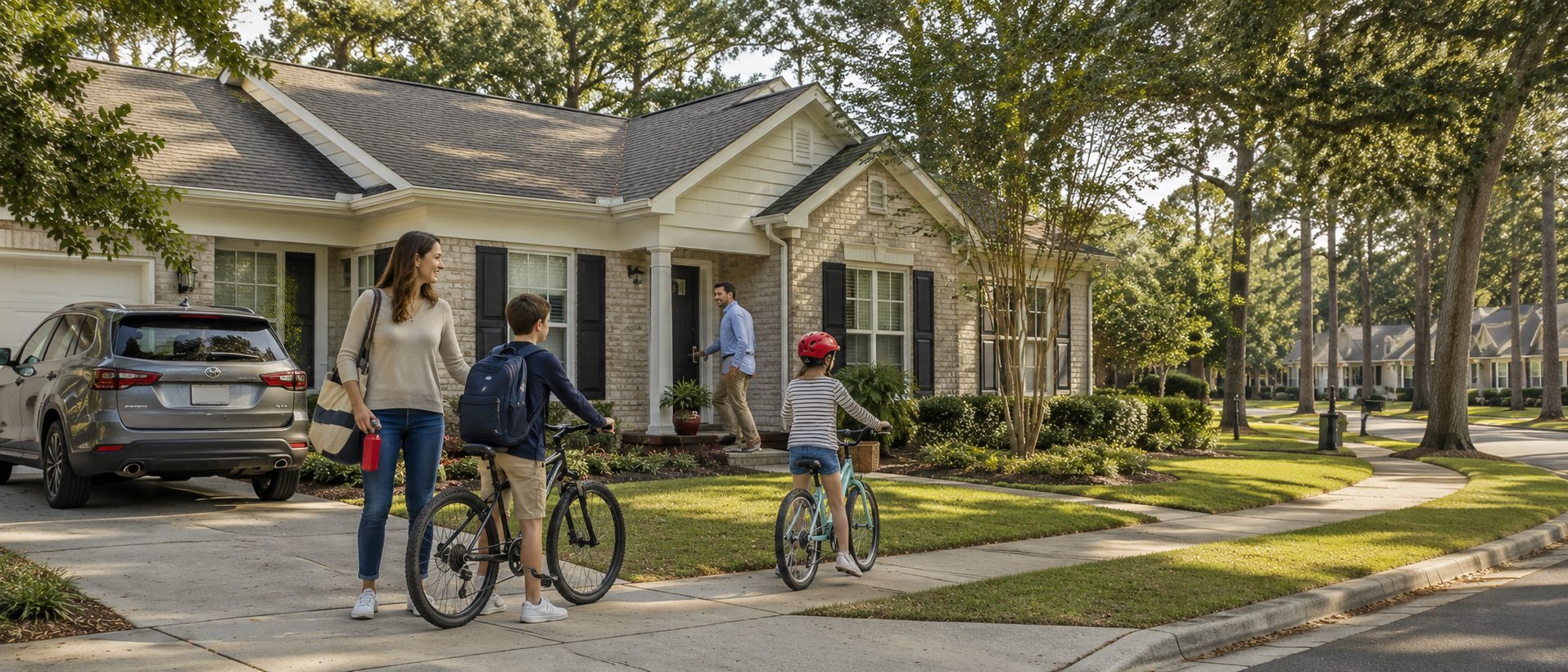
Why affordability is only one part of deciding what home truly fits.
There’s a number that tends to get a lot of attention when you’re preparing to buy a home:
How much can I afford?
It’s an important question. You need to understand your financing, your available cash, and the price range in which you can realistically shop.
But we’d suggest adding another question right beside it:
How much house fits the life I actually want to live?
Those aren’t necessarily the same thing.
A lender can help determine what you qualify to borrow. Your real estate agent can help you understand what different price points may buy in the Northwest Florida market.
But neither number, by itself, can tell you what will feel comfortable once you’re actually living there. That part takes a little more thought.
What You Can Buy Isn’t Always What You Should Buy
Being approved for a certain amount doesn’t mean you have to spend it.
There are buyers who feel perfectly comfortable purchasing near the top of their range. Their income, savings, lifestyle, and future plans support it.
For someone else, doing the same thing could leave very little room for everything else they value.
Travel.
Children’s activities.
Saving for retirement.
Helping aging parents.
A boat.
Weekend dinners out.
A career change.
Or simply having enough breathing room that an unexpected expense doesn’t become a crisis.
That’s why thoughtful decisions lead to better moves.
A home should support your life. Your life shouldn’t have to reorganize itself around your house payment.
The Purchase Price Isn’t the Whole Cost of Living There
Two homes with similar prices can have very different costs once you own them.
One may have an HOA. Another might have a large yard to maintain.
A waterfront property can offer a lifestyle you’ve always wanted while introducing different insurance, maintenance, and property considerations.
An older home might be beautifully maintained but have systems that will eventually need replacement.
A larger home means more space—but potentially more furniture, utilities, upkeep, and repairs.
And here in Northwest Florida, insurance and property-specific considerations deserve attention early in the decision, not as an afterthought.
None of these things automatically make one home a better choice than another.
They simply belong in the conversation.
Sometimes You’re Choosing Between House and Lifestyle
Imagine two homes.
One gives you the extra bedroom, bigger kitchen, pool, and larger yard you hoped for—but it also puts you near the top of the monthly housing cost you’re comfortable carrying.
The other gives up a little space but leaves more room in the budget for travel, savings, hobbies, or simply not worrying about every unexpected expense.
Which one is better?
We can’t answer that for you.
And that’s the point.
The right answer depends on what matters most in your life.
As we discussed in Buying a Home Is About More Than Finding the Right House, the best home isn’t simply the property with the longest list of desirable features.
It’s the one that fits the larger picture.
Think About an Ordinary Month, Not Just Closing Day
There’s a lot of excitement surrounding a home purchase.
The offer.
The inspection.
The closing.
Getting the keys.
Moving in.
But most of homeownership isn’t closing day.
It’s Tuesday morning.
It’s paying the electric bill in August.
It’s replacing an appliance.
It’s mowing the lawn.
It’s making vacation plans.
It’s deciding whether you can comfortably handle an unexpected repair.
When we’re helping buyers evaluate homes, we want them to imagine that ordinary life too.
A home can be financially possible on paper and still not be the right financial fit for the way you want to live.
More House Can Also Mean More Responsibility
Sometimes buyers naturally assume that getting more for their money is always better.
More square footage.
More land.
A pool.
A dock.
Extra bedrooms.
Those things can be wonderful—when you’ll use and enjoy them.
But every feature has a life after the listing photos.
Pools need maintenance. Larger yards require care. Waterfront properties come with their own responsibilities. Extra rooms need to be cooled, furnished, cleaned, and maintained.
Before paying for “more,” it’s worth asking whether that more adds something meaningful to your everyday life.
That idea is closely connected to what you can’t change after you buy the house.
Some features are worth stretching for because they’re difficult or impossible to add later. Others may simply be things that looked good during the showing.
Knowing the difference matters.
Your Future Deserves a Place in the Budget Too
Buying decisions shouldn’t be based only on today’s circumstances.
What might change over the next few years?
Will childcare expenses increase or decrease?
Are you approaching retirement?
Could a military PCS change your timeline?
Do you expect your household income to change?
Are there other financial goals you don’t want homeownership to crowd out?
Nobody can predict everything.
But thinking ahead can help you choose a home that gives you options instead of limiting them.
That’s one reason we believe the right questions belong in the home-buying process before you fall in love with a house.
Questions Worth Asking
Before deciding how much house is right for you, consider:
- What monthly housing cost feels comfortable to us—not simply possible?
- What do we want our money to leave room for besides the house?
- Are we paying more for features we’ll genuinely use and value?
- What ongoing costs come with this particular home, property, or lifestyle?
- Would choosing a little less house give us more of the life we actually want?
There’s no universally correct answer. There is only the answer that makes sense for you.
The Goal Isn’t to Spend Less. It’s to Choose Well.
This isn’t an argument for buying the least expensive home you can find.
Sometimes spending more gets you something tremendously valuable: the right location, a shorter commute, a property that better supports your family, less future renovation, or a feature that would be difficult to add later.
The goal isn’t simply to spend less.
It’s to understand what you’re spending more for—and why it matters to you.
That’s the kind of conversation we want our buyers to have before they make an offer.
Because when the home, the budget, and the life you want are all working together, you’ve found something much more valuable than a house you can afford.
You’ve found a home that fits.
Written by the Sherman Grimmer Group
The Sherman Grimmer Group shares thoughtful real estate guidance through Steady Together, helping buyers and sellers throughout Northwest Florida make confident decisions at every stage of life.
Steady Together
The right home should give you a place to live your life—not consume everything you’ve worked to build around it.
If you’re trying to balance price, priorities, location, lifestyle, and future plans, we’re here to help you look at the whole picture before deciding what feels right.
Because thoughtful decisions lead to better moves.
— The Sherman Grimmer Group
